
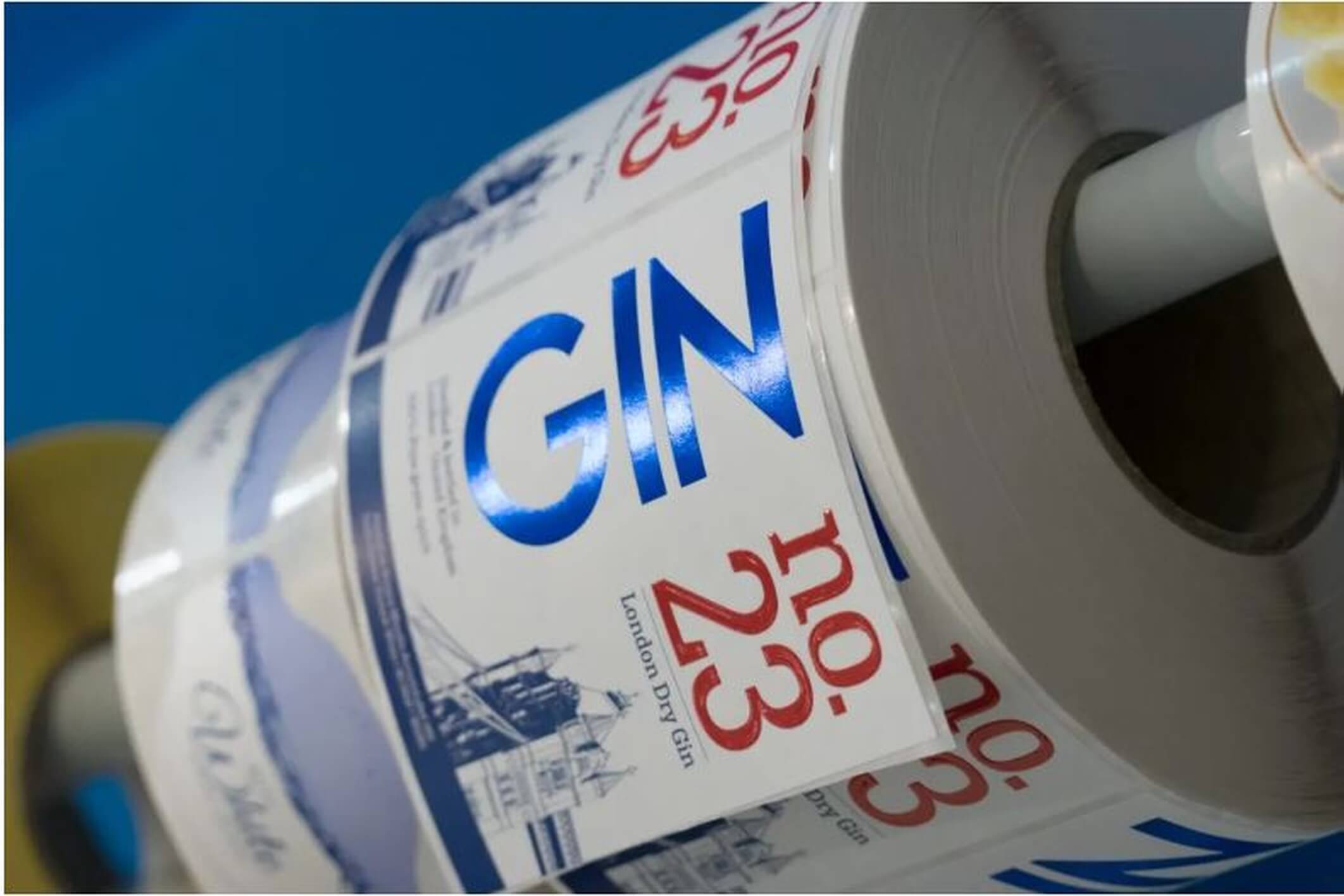

Can a production printer handle product label printing?
Yes, with the right expectations. Digital production presses are well-suited for short-run, compliance-driven, and variable-data label work. They are not a replacement for roll-fed label presses.
For SMBs printing labels frequently and in moderate volumes, an in-house production press eliminates vendor lead times, minimum order requirements, and overproduction waste, often reducing total cost of ownership by 20 to 30%.
Key Takeaways
- Outsourcing product label printing typically comes with long lead times, minimum order requirements, and overproduction waste—costs that compound quickly for businesses with frequent label changes.
- The Konica Minolta AccurioPress series supports cut-sheet labels, synthetic paper, and polyester substrates up to 450 gsm, making it a capable solution for short-run, compliance-driven, and variable-data label work.
- Production presses are the right tool for sheet-format, design-sensitive, and short-run label jobs, not for continuous roll stock or inline die-cutting applications.
- Food and beverage, healthcare, manufacturing, and government organizations in the Northeast face label revision cycles that make outsourcing an operational liability.
- A print assessment with a qualified specialist is the most practical first step to determine whether in-house label production makes financial sense for your volume and workflow.
A label change shouldn't take two weeks and a minimum order of 5,000 units.
Yet for many small and mid-sized businesses, that's exactly the reality of outsourcing product label printing—waiting on vendors, absorbing overproduction costs, and losing the flexibility to respond when a product formulation, regulation, or brand standard changes.
There's a better model, and it starts with understanding what your print infrastructure can actually do.
Why Product Label Printing Is Growing In Importance
The global label printing market was valued at $44.7 billion last year and is projected to reach $74 billion by 2034.
This rise is likely driven by mounting compliance requirements, supply chain traceability mandates, and the accelerating need for variable-data printing across food and beverage, healthcare, and manufacturing sectors.
Food and beverage alone accounts for 38.9% of that demand, reflecting just how critical accurate, compliant labeling has become for product-driven businesses.
These pressures are pushing more organizations to reconsider the outsourcing model — and to ask what their existing or planned print infrastructure could handle in-house.
What Do Small and Medium Enterprises Need From Their Product Label Printer?
Product label printing isn't a single-format challenge.
A food manufacturer in Vermont printing ingredient and allergen compliance labels has different requirements than a healthcare organization printing specimen identification labels or a regional manufacturer producing asset tags and serialized product codes.
What these use cases share is a common set of demands:
- Color accuracy
- Substrate durability
- Regulatory compliance
- Ability to produce the right quantity at the right time without waste
And you don’t (always) have to outsource to achieve that.
What a Production Printer Can (and Can't) Do for Product Labels
Production printers, specifically digital presses, are genuinely capable for certain product label printing applications. They are not the right tool for every label job, and knowing the difference will determine whether in-house printing saves you money or creates new problems.
Where Production Printers Perform Well for Label Work:
The AccurioPress C12000 and C14000 series support media up to 450 gsm, including cut-sheet labels, synthetic paper, polyester, textured stock, and embossed media.
These presses deliver 3,600 x 2,400 dpi equivalent image quality with automated color calibration, making them well-suited for:
- Short-run sheet-format labels
- Compliance and regulatory labels
- Product packaging inserts
- Branding labels on card or synthetic stock
- Serialized variable-data label printing
For organizations that frequently update label content, such as seasonal products, regulatory revisions, and SKU proliferation, the ability to run a short job on demand, without plate fees or minimum order commitments, has direct financial value.
Where Production Printers Have Limitations for Label Work:
Sheet-fed digital presses are not roll-fed label presses.
If your label workflow requires continuous roll stock, inline die-cutting, pressure-sensitive label finishing, or waterproof/chemical-resistant substrates designed for outdoor or cold-chain environments, a dedicated label press—or a specialist outsourcing partner—remains the more appropriate solution.
Production printers excel at flat-sheet print quality and volume; they are not a replacement for purpose-built label printing equipment when the application demands it.
For most SMBs, a production press handles a meaningful portion of your label volume, particularly the short-run, design-sensitive, compliance-driven work, while some specialized jobs may still be outsourced. That hybrid model often delivers the best total cost outcome.
The Real Cost of Outsourcing Your Label Jobs
The per-label cost of outsourcing looks reasonable until you account for everything else.
Most outsourced label production comes with weeks-long lead times, minimum order quantities that often exceed actual demand, and the near-certain reality of overproduction.
When a business outsources a label run, it typically orders up to 20% more copies than needed, either to qualify for volume pricing or to hedge against error, with those excess labels eventually discarded.
Why does this happen?
Traditional flexographic printing (the standard for high-volume commercial label production) historically required minimum runs of 10,000 units to be economically viable. Digital platforms have compressed that threshold, but outsourced print shops still set their pricing around volume assumptions that rarely align with an SMB's actual run sizes.
The less visible costs add up quickly:
- Rush fees when a product label needs an immediate update
- Shipping and handling on every order
- The internal labor cost of managing a vendor relationship
- The operational exposure created when an outsourced order has an error
When you account for labor, waste, equipment amortization, and logistics, bringing printing in-house saves 20 to 30% on the total cost of ownership for most mid-sized businesses.
Industries That Benefit Most from In-Sourcing Their Product Label Printing
For businesses across Vermont, New Hampshire, northern New York, and Maine, in-house product label printing addresses industry-specific pressures that generic outsourcing solutions often can't keep pace with.
Food and beverage producers face label revision cycles driven by ingredient updates, allergen disclosures, seasonal SKUs, and FDA compliance requirements. The ability to update and reprint a label the same day a formulation changes is operationally significant.
Healthcare and life sciences organizations face similar urgency around specimen labeling, medication identification, and device tracking under Unique Device Identification requirements.
Manufacturers and industrial businesses across the region deal with asset tags, compliance labels, and product identification requirements that change with each new customer specification or regulatory update.
Government and education institutions managing internal printing operations often have the volume to justify in-house production across forms, signage, and identification labels.
What all of these organizations share is a need for label output that is accurate, timely, and brand-consistent.
We’ve helped companies experience the benefits of in-sourcing their printing firsthand.
Laura Marr Printing was outsourcing the majority of its print jobs due to the limitations of its existing inkjet equipment, waiting days for proofs, and additional days for completed jobs. After SymQuest installed a Konica Minolta AccurioPress color production press, the company brought its work fully in-house, eliminated third-party wait times, and saw productivity and profits increase.
As owner, George Libby put it:
"We now control our own destiny."
How to Know If In-House Label Printing Is Right for You
The decision comes down to three variables: volume, frequency, and flexibility requirements.
If your organization runs label jobs more than once a month, regularly updates label content due to compliance or product changes, currently pays rush fees to your print vendor, or orders labels in quantities that exceed your actual consumption, the economic case for in-house production is likely already there.
If your label jobs are infrequent, highly specialized (requiring roll finishing, die-cutting, or outdoor-grade durability), or represent a very small portion of your overall print activity, outsourcing or a hybrid model continues to make sense.
A print assessment with a qualified specialist will identify where in-house production creates the most return for your specific label volume and type.
Is a Production Printer the Right Investment for Your Label Printing Needs?
Product label printing doesn't have to mean waiting on vendors, overordering to hit minimums, or paying rush fees every time a compliance update comes through.
For SMBs with consistent label volume and frequent content changes, a production press offers the quality, media flexibility, and on-demand capability to take meaningful control of that output.
The key is matching the right equipment to the right workflow. SymQuest's print specialists work with organizations across the Northeast to assess current print spend, identify in-house production opportunities, and recommend equipment that fits the work.
Contact SymQuest to schedule a print assessment and find out what in-house label printing could look like for your organization.